A Malaysia-led initiative founded on the principle that aging is not a crisis to be managed, but an infrastructure to be built.
AgeTech Asia provides the strategic roadmap, workforce training, and policy alignment needed to turn the challenges of an aging population into a sustainable economic asset.
The platform serves as the nexus for the leadership required to transform strategic dialogue into resilient, aging-ready systems across Southeast Asia. Through the synchronization of policy, capital, and innovation, the regional response is moved from theory to structural reality.
The Multi-Speed Reality: Southeast Asia is not aging at a single speed; it is a complex, multi-speed transition that requires a synchronized regional response.
By 2030, the region will be home to 140 million people aged 65+, making age-readiness a fundamental pillar of national infrastructure.
Definitions & Demographic Thresholds
To provide precise data, we follow the United Nations standards for population aging:
Aging Society
7% to 14% of the population is aged 65+.
Aged Society
14% to 21% of the population is aged 65+.
Super-Aged Society
Over 21% of the population is aged 65+.
Regional Trajectory (Percentage of Population 65+)
• Singapore: Moving from 15% to 35% (The most advanced transition).
• Thailand: Moving from 13% to 30%.
• Vietnam: Moving from 8% to 20% (Rapid acceleration).
• Malaysia: Reaching "Aged Nation" status by 2030, a transition occurring in just 20 years (See the National Deep-Dive below).
The Global Comparison (The Mature Aging Economies)
• South Korea: Projected to be the world's fastest-aging society, hitting nearly 40% by 2050.
• Japan: The global pioneer in aging-readiness, with over 28% of its population already aged 65+.
The Regional Synchronizer
While Japan and Korea provide "Super-Aged" blueprints and Singapore and Thailand serve as regional laboratories, the mandate of AgeTech Asia is to facilitate the cross-border exchange of these proven frameworks.
The platform enables Malaysia and ASEAN partners to bypass the "looming cost crisis" by architecting the systems necessary to unlock the Longevity Dividend.
The "20-Year Sprint" (60+ Metric):
• The Official Baseline: In 2010, Malaysians aged 60 and above made up only 7.9% of the population.
• The 2030 Milestone: By 2030, this figure will climb to 15.3%.
• The Reality: Malaysia is transitioning from an "Ageing" to an "Aged Nation" in just 20 years, one of the fastest paces in modern history.
The Comparison of Readiness (Years to Transition):
While developed nations had a century to build their social safety nets, Malaysia must do so in a fraction of the time:
• France: 115 Years
• United Kingdom: 45 Years
• Japan: 26 Years
• Malaysia: 24 Years (65+ Metric)
The Fiscal & Social Impact:
• Life Expectancy: Longevity has increased significantly, with the average life expectancy reaching 75.2 years in 2024.
• Pension Sustainability: Federal pension expenditure for the elderly is projected to triple, reaching RM22.3 billion by 2030.
• Old-Age Dependency: By 2025, the old-age dependency ratio is expected to reach 11.4 (seniors per 100 working-age adults), placing unprecedented pressure on the "Sandwich Generation" and national productivity.
The synchronization of stakeholders and policy across Southeast Asia is achieved through targeted strategic interventions designed to close the gap between current systems and future demographic requirements.
STRATEGIC INSIGHT
The framing of critical issues within the Longevity Economy provides partners with the evidence and regional context required to anticipate emerging demographic shifts before they escalate into systemic crises.
ECOSYSTEM ORCHESTRATION
The mapping of regional opportunities and the synchronization of stakeholders across the five core domains serve to build integrated human infrastructure and resilient community systems.
POLICY COLLABORATION
The facilitation of high-level engagement between government agencies and industry leaders aligns national priorities and enables the scaling of sustainable, age-forward models.
The framework for regional aging-readiness is operationalized through four core functional domains. These domains serve as the mechanisms for translating high-level strategy into measurable national impact.
Operationalizing the Strategy.
The provision of structured learning pathways and HRD Corp–registered training programs facilitates national-level upskilling and the development of workforce resilience.
These programs are designed to empower the public and private sectors to navigate the complexities of a multi-generational labor market.
The professional development of high-level forums, summits, and policy dialogues serves to generate regional visibility and, critically, secure stakeholder buy-in for systemic infrastructure changes.
This architecture ensures that strategic dialogue is directly linked to actionable implementation roadmaps.
Through the delivery of technical research and strategic communication support, the longevity agenda is framed with the rigor required for both public and private audiences.
This evidence-driven approach transforms aging from an opinion-based social topic into a data-backed economic priority.
The deployment of scalable frameworks and engagement models enables organizations to move from initial awareness to full-scale, sustainable implementation.
These tools provide the necessary governance and monitoring structures to ensure long-term progress across the regional ecosystem.
AgeTech Asia operates as a strategic initiative of Intellia Holdings Sdn. Bhd.
While the platform serves as the neutral regional nexus for stakeholder alignment, Intellia provides the specialized operational framework necessary to translate strategic vision into measurable impact.
Partners leverage this integrated capability suite to activate and scale national-level aging initiatives.
Principal Consultant
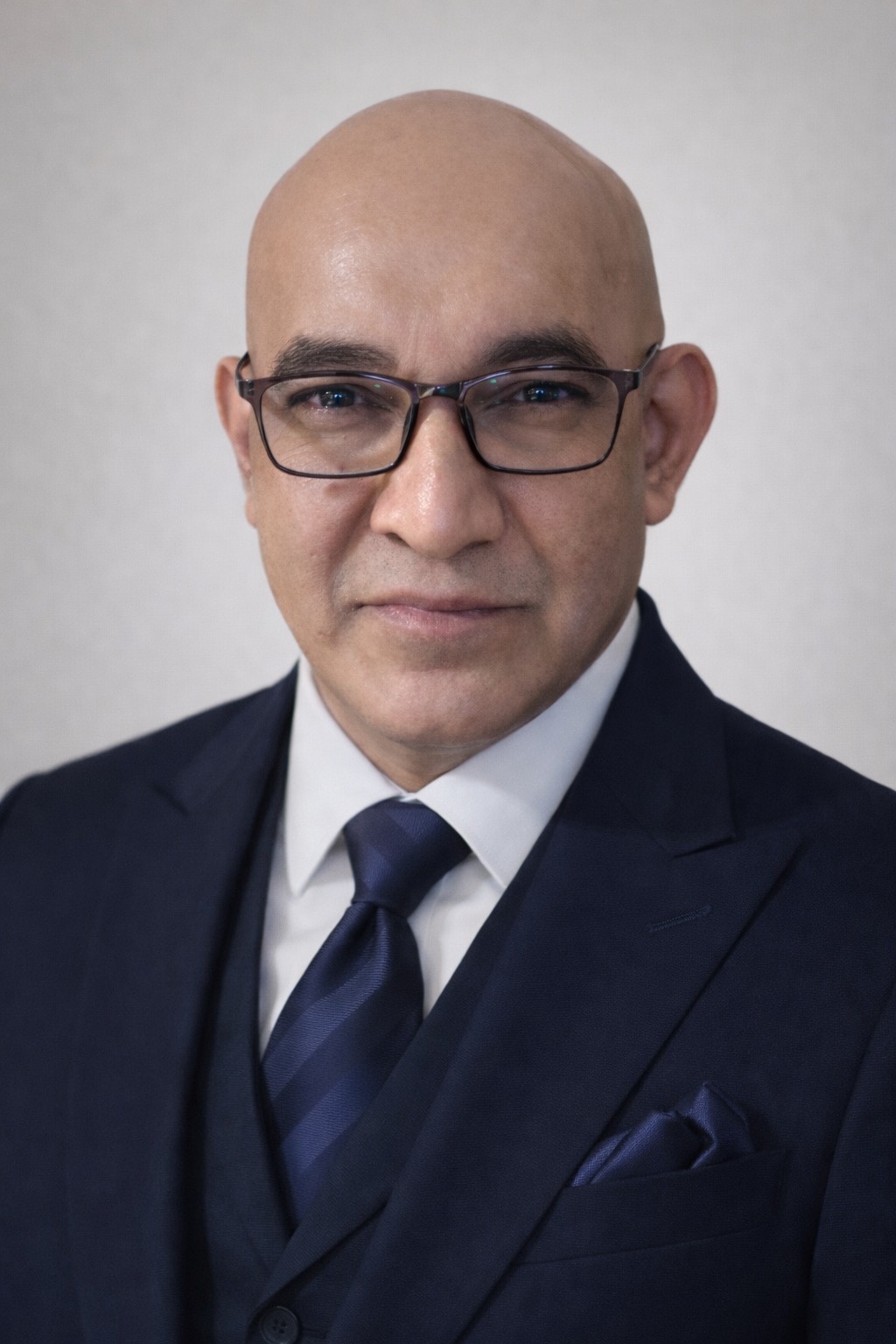
The strategic architecture of AgeTech Asia is led by Shamir Chakrabarty, who applies a data-driven engineering methodology to the complexities of the longevity economy. A Chemical Engineer by training with an extensive background in the Energy and Oil & Gas sectors, he directs the platform’s mission to synchronize technology with resilient national policy.
As the Managing Director of Intellia Holdings, Shamir provides strategic guidance to Governments and Government-Linked Companies (GLCs) on the transition to autonomy. His expertise lies in the systematic design of "Human Infrastructure," transforming regional demographic shifts into sovereign economic opportunities through institutional program design.
Co-Founder
Rubi-Ain drives AgeTech Asia's operational execution, steering regional summits and forums that turn strategy into impact. She nurtures the platform's stakeholder ecosystem, translating high-level goals into tangible social and economic outcomes.
With experience spanning finance, healthcare, and innovation, Rubi-Ain leverages her leadership in charities and foundations to deliver complex initiatives, bridging public-private gaps and driving value for institutional partners.
Whether exploring national policy priorities or regional collaboration, the platform provides the necessary tools and frameworks to move from awareness to impact.
Our engagements are custom-scoped based on the scale of the ecosystem or organization. We typically offer three tiers: Strategic Briefings (One-off), Ecosystem Architecture (Project-based), and Retained Advisory (Annual). Contact us for a tailored proposal.