The Middle-Income Trap

Why Malaysia's Compressed Ageing is a Warning Signal for Developing Asia

The latest data from the Ministry of Health says the window is closing faster, and on our own definition, we cross the line within a decade.

Across Southeast Asia, the demographic reality is not moving at a single speed. As we outline in our Regional Framework, the region is a complex, "Multi-Speed" landscape where Singapore acts as the laboratory, Thailand as the care hub, and Vietnam as the next wave.

But nowhere is the story more urgent, or the warning signal flashing redder, than right here in Malaysia.
Malaysia is the first test case for the "Middle-Income Longevity Trap," but it won't be the last. For our neighbours in Indonesia, the Philippines, and Vietnam, what happens in Kuala Lumpur over the next decade is not just news; it is a preview of your own future.

While Japan and South Korea provided the world with the "Super-Aged" blueprint, they had a luxury that the next wave of Asian tigers do not: time and wealth. Japan became a rich nation before it became an old one.
Malaysia does not have that buffer. We are racing toward "Aged Nation" status in a compressed sprint, becoming the world's first true test case for the "Middle-Income Longevity Trap."
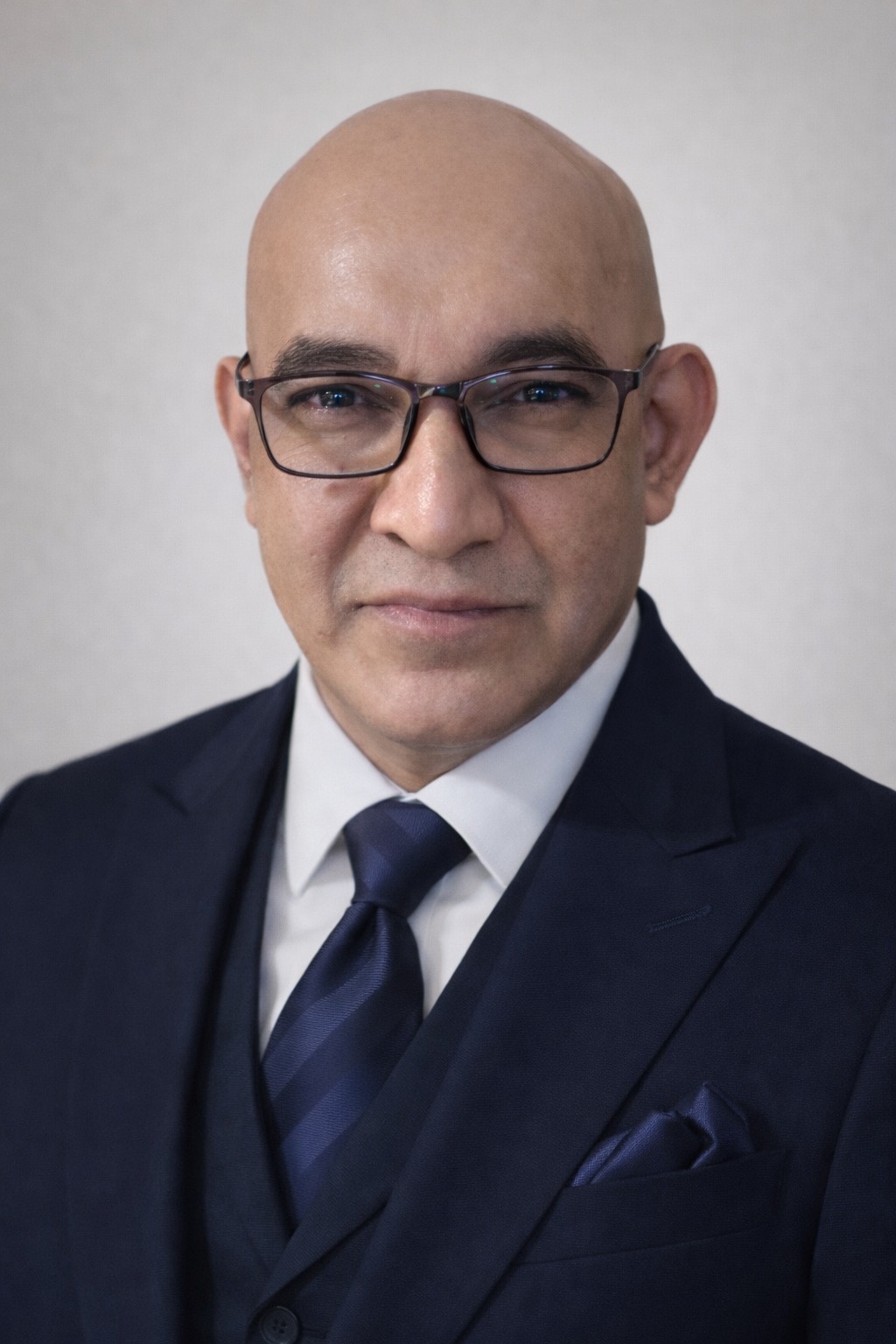
Shamir

Principal Consultant

Middle Income Trap

The New Data - The Compression Phase

For years, we operated under the comforting assumption that we had a "20-Year Sprint" (2010 to 2030) to prepare, with the population aged 60 and above crossing the 15% "Aged Nation" threshold around 2030.

The Ministry of Health has now shortened that timeline. At the launch of the National Health and Morbidity Survey (NHMS) 2025: Older Persons Health in Putrajaya in April 2026, Health Minister Datuk Seri Dr Dzulkefly Ahmad stated that Malaysia is undergoing "compressed ageing" at a rate 1.5 times faster than Japan's historical shift, and that, on the national 60+ threshold, the country will officially become an "Aged Nation" by 2036, with 15% of citizens aged 60 and above.

That is roughly a decade away. It also reframes the challenge: we are now attempting to build, in years, the social safety nets that nations like France took 115 years to construct.

The economic dimension of that warning was set out earlier the same year by the PNB Research Institute (PNBRI). In its January 2026 report, Building Financial Resilience for Malaysians: Economic Security in an Ageing, Middle-Income Economy, PNBRI concluded that Malaysia is ageing before becoming a high-income nation, leaving households with weaker incomes, limited savings, higher debts, and thinner financial buffers than wealthier peers like Japan, South Korea, and Singapore.

Two timelines, one conclusion. The health data says the demographic clock is faster than we assumed. The financial data says we are nowhere near ready to pay for it.

AgeTech Asia

To understand the gravity of the situation, look at where Malaysia sits on the AgeTech Asia Matrix, a comparison of how fast we are ageing versus how rich we are when it happens.

The Western Model (Rich & Slow). Nations like the UK and France aged slowly. They had generations to build wealth. They could afford "organic" growth.

The Asian Miracle (Rich & Fast). South Korea and Japan aged at warp speed, but they sprinted to "High Income" status just in time to pay for it.

The New Reality (Middle & Fast). This is where Malaysia sits. While Vietnam presents the region's most extreme outlier, ageing fast on a lower income base, Malaysia represents the critical "Middle Ground."

We are ageing at "First World Speed" on a "Developing World Budget." This creates a squeeze that traditional welfare models cannot solve.

The “Infrastructure” Mandate

If Malaysia is the "Lab" for developing Asia, the initial results confirm our core conviction: ageing cannot be managed as a crisis; it must be built as infrastructure.

The data exposes why "welfare" (cash handouts) is mathematically obsolete. Just look at the human reality behind the numbers:

The Savings Cliff. About 50% of EPF contributors have less than RM10,000. That isn't a retirement fund; it is barely three months of survival.

The Wage Decoupling. Productivity grows, but wages stagnate. This places an unbearable burden on the "Sandwich Generation," sons and daughters who want to support their parents but can barely secure their own financial future.

This is not a failure of charity; it is a failure of Human Infrastructure.

 The Validation - Data Catches Up to Strategy

For AgeTech Asia, this latest stream of health and financial data is not a revelation; it is a statistical validation of the roadmap we have advocated since inception.

The emerging institutional call for a shift from "welfare" to "economic security" mirrors the very core of our founding principle: ageing is not a crisis to be managed, but an infrastructure to be built.

This isn't just a Malaysian fix. The "Human Infrastructure" model we are building, portable benefits, longevity fintech, and silver productivity, is designed to be a regional blueprint. The scale of the ASEAN+3 market (over 2 billion lives) demands a solution that transcends borders.

The three economic "engines" highlighted in recent findings are simply the economic proof points for the Human Infrastructure ecosystem AgeTech Asia is already architecting:

1. Capability (Productivity Infrastructure). The data calls for "capability," but we call it Dignity. AgeTech Asia is moving beyond theory by deploying HRD Corp-registered pathways that turn the "Silver Workforce" from a concept into a deployable asset, allowing older adults to remain active, valued, and paid.

2. Ownership (Longevity Fintech). The market calls for asset accumulation, confirming our push for Longevity Fintech. The "ownership gap" isn't solved by subsidies; it is solved by democratising access to yield, giving the middle class the same financial tools the wealthy have always used.

3. Resilience (System Synchronisation). The findings argue for "resilience," which aligns perfectly with our Regional Synchronisation. With the gig economy booming, the employer-based safety net is broken. We are building the portable, synchronised ecosystem that ensures protection follows the worker, not the job.

THE VERDICT

From Theory to Structural Reality

The data is clear. The Western model is irrelevant. The "organic growth" model is dead.

The data has provided the numbers, but AgeTech Asia provides the roadmap. The question is no longer "what to do"; the market has settled that.

The question is "how to build it."

And that is where the work of AgeTech Asia begins.
Whether you are a policymaker in Jakarta, a tech innovator in Shenzhen, or an investor in Singapore, the lab is open. Let's build the infrastructure together.

Editor’s Note:
Editor's Note: This analysis uses two distinct ageing thresholds, which is why timelines vary by source. Under Malaysia's domestic Dasar Warga Emas Negara (National Policy for Older Persons), a nation is "aged" when 15% of the population reaches 60 and above. This is the basis for the Ministry of Health's 2036 projection. Under the international standard tracked by bodies such as the World Bank, a nation is "aged" when 14% of the population reaches 65 and above, projected for Malaysia in the 2040s. The PNB Research Institute (January 2026), using the 65+ standard, dates this transition to around 2040, "just over two decades." By every measure, Malaysia is ageing faster than the high-income economies did, and at a fraction of their income level.

About AgeTech Asia

AgeTech Asia is a regional platform advancing aging-readiness across Malaysia and Southeast Asia through collaboration, insight, and practical innovation.

AGETECH ASIA
A regional initiative by Intellia Holdings Sdn. Bhd. (202101022002)
© 2026 AgeTech Asia. All Rights Reserved.
Terms & Conditions | Privacy Policy